


Making EEG Easier for Children With Autism: A Pediatric Neurologist’s Experience

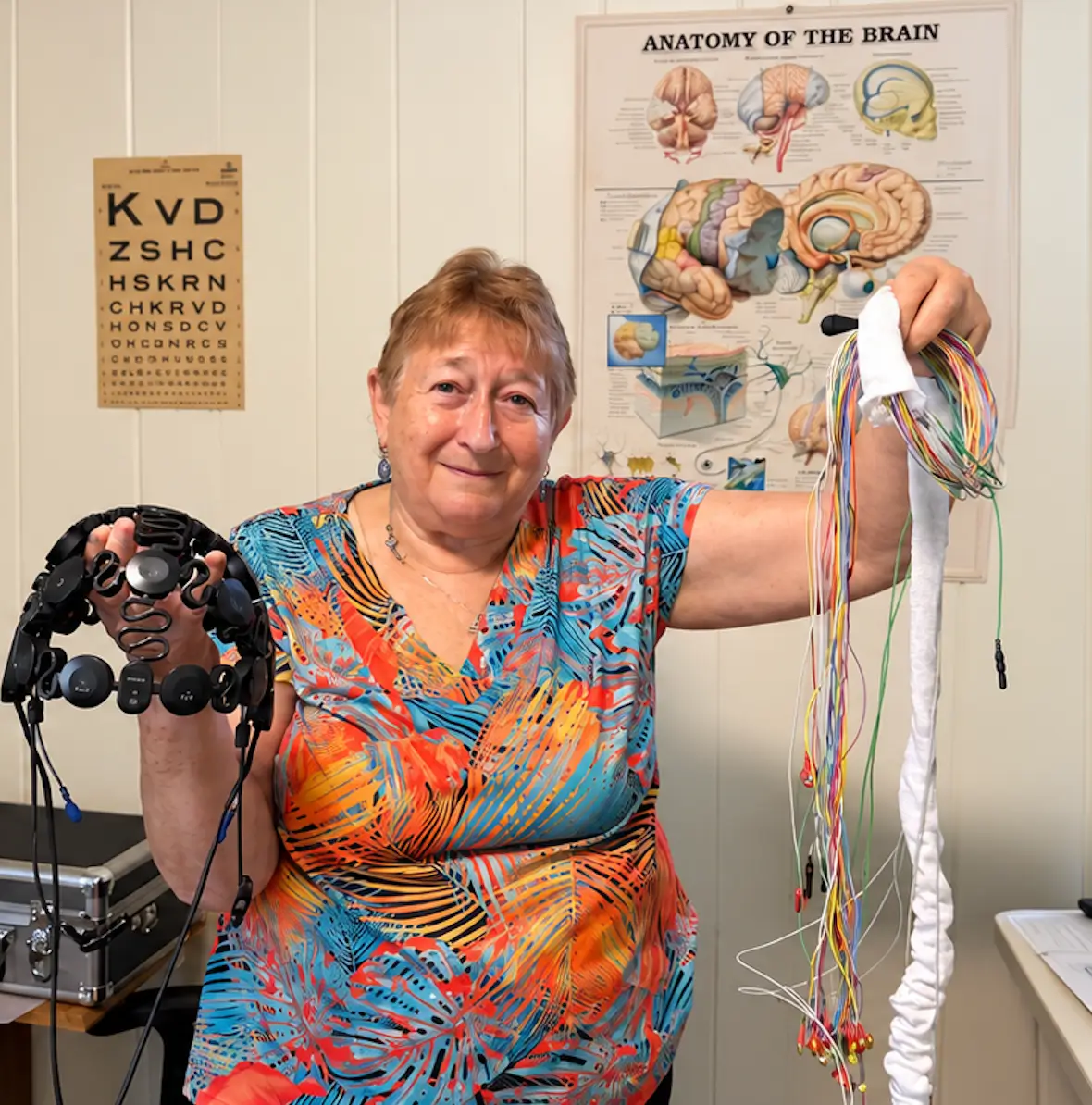
Dr. Elfrida Malkin shares her experience with Zeto EEG in her pediatric neurology practice, including its use with children with autism and sensory sensitivities.
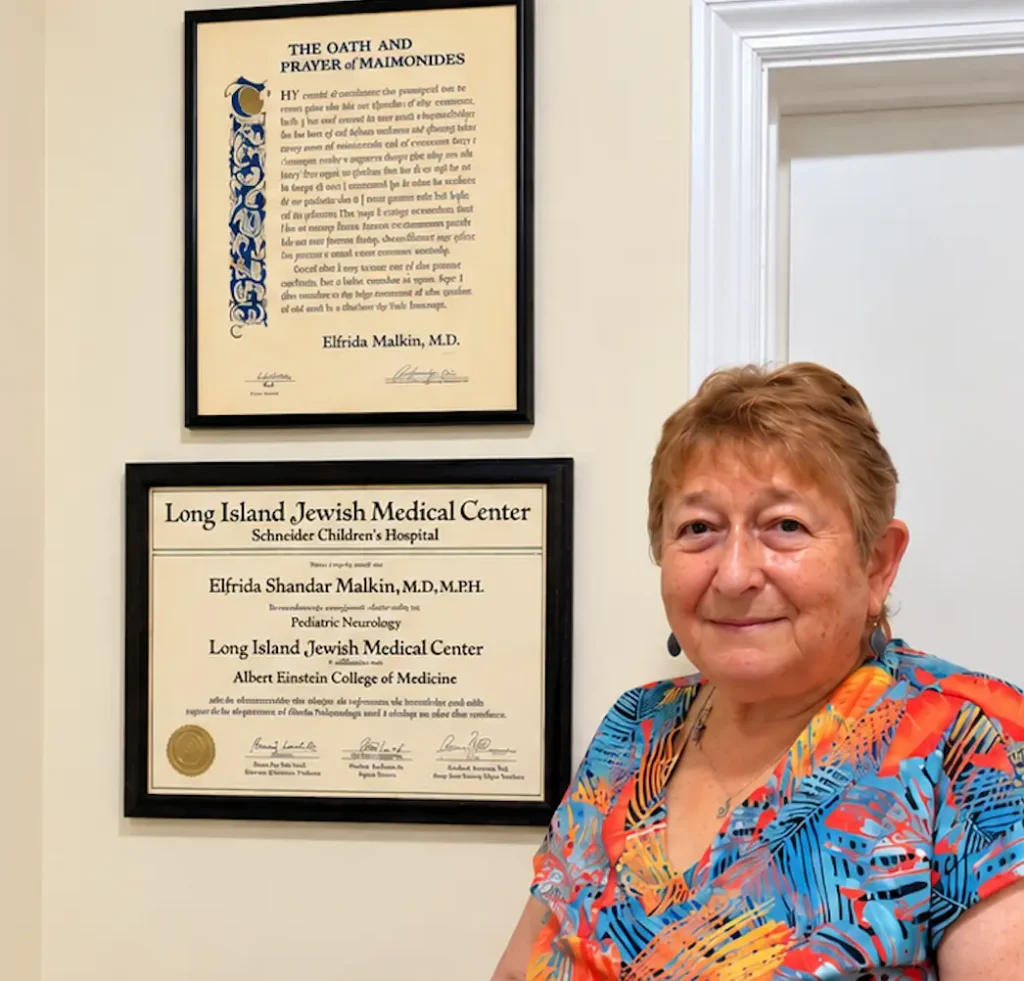
Performing an EEG on a child can be challenging, particularly when a patient has autism or sensory processing difficulties. For pediatric neurologist Elfrida Malkin, M.D., simplifying the EEG setup has made a meaningful difference in her practice.
Dr. Malkin uses Zeto EEG in her pediatric neurology practice in Nyack, New York, including for children with autism. We spoke with her about her experience, how her staff learned to use the system, and why she sees a simpler EEG setup as particularly valuable for this patient population.

EEG for Children With Autism
When do you use Zeto EEG in your practice?
Dr. Malkin:
I use it when I need to rule out seizures or when a patient is already diagnosed with epilepsy. I have a lot of children with autism in my practice.
How well do children with autism tolerate the Zeto headset?
Dr. Malkin:
Patients who have had regular EEGs in the past tell us that Zeto is much easier.
Most of these patients have routine EEGs. I usually record for about 75 minutes. I prefer a longer (than typical 20-40 routine EEG) recording because you have more opportunity to pick up abnormalities, and with children, you also hope they will fall asleep during the study. We try to make the room comfortable and quiet so the child can relax.
I have them lie back in a chair and use a pillow to help make them comfortable.
I have a lot of children with autism, including children with severe or a mild form of autism. Some cannot really tell us how they feel. I also have a lot of children with Asperger’s who are verbal and can communicate with us.
Some patients mentioned that the frontal electrodes could be a little tight and then we can release the headset a little bit or move it slightly.
What can make conventional EEG challenging for children with autism, and how does Zeto compare?
Dr. Malkin:
With a conventional EEG, it can be very difficult. You may put electrodes on one side and start working on the other side, and the first electrodes may already be disconnected because the patient is pulling them off.
With Zeto, it is much easier. You prepare everything and put the headset on. With a conventional system, you also need to use paste, and the setup takes longer.
Do you prepare your patients for an upcoming EEG?
Dr. Malkin:
My first encounter with a patient is actually through the parents. I schedule a telemedicine visit with the parents, take the history and listen to what they are seeing.
If I hear about staring episodes, for example, or if the child is very inattentive and I need to rule out seizures, I explain to the parents that EEG is needed and we have a new headset that is easy to set up and that the application is fast.
EEG Setup and Staff Training
Who applies the Zeto headset in your practice, and how much training was needed?
Dr. Malkin:
My assistant applies the headset. The Zeto team came to our practice and trained us. The training took a few hours, and after one training my assistant was comfortable using it.
I have never applied it myself, but I think I could.
EEG Quality and Video
How would you compare the EEG quality with conventional EEG?
Dr. Malkin:
I would say it is the same quality. Zeto’s data quality is good, and the artifact reduction is a great feature.
I also like having the video and the head-movement element. When I see head movement, I can check whether what I’m seeing on the EEG is an artifact. I monitor studies closely and video is very helpful.
Bringing EEG Into a Pediatric Neurology Practice
What is the advantage of having EEG available in your practice?
Dr. Malkin:
You don’t need to have an EEG technologist coming only at a specific time on specific days. You can train yourself or train your medical assistant.
EEG can be done when you need it. You can see a new patient and decide, “Okay, let’s do it.”
I had one patient whose head circumference was smaller than the smallest Zeto headset, and I felt the EEG was pretty much an emergency. I called different hospitals, and the earliest I could get the patient in was about a week. If you have EEG in your practice and need it urgently, you don’t need to wait for somebody.
How does the reimbursement process for Zeto EEG compare with conventional EEG?
Dr. Malkin:
The process is the same.
Reimbursement in general has gone down significantly compared with what it was before COVID. Some insurance companies reimburse very little now. But the process itself is the same.
Can you remember a case where EEG findings changed the next step for a patient?
Dr. Malkin:
Yes. EEG is like a map of the head. You may see that one area is very slow or that spikes are coming from a particular area.
Recently, I did an EEG and saw slowing and spikes coming from one area. I ordered an MRI of the brain right away, and the patient had a brain tumor.
EEG can show you that there may be a problem in a particular area and help determine whether the patient needs additional evaluation or another specialist.
What Pediatric Neurologists Should Know
What would you want other pediatric neurologists to know about Zeto EEG?
Dr. Malkin:
I think timing is an important thing. The setup is shorter, and could be done by medical assistant if your eeg tech is not available.
Also, it’s a huge change for autistic kids. It is difficult to do an EEG on an autistic child. With Zeto, it is easier to do.
At a Glance
| Category | Summary |
| Practice Setting | Outpatient pediatric neurology, Nyack, New York |
| Patient Population | Children, including those with autism and sensory sensitivities |
| Typical Use | Evaluation of suspected seizures and monitoring of patients with epilepsy |
| Headset Applied By | Trained medical assistant |
| Staff Training | A few hours of training; assistant comfortable after one session |
| Recording Length | Approximately 75 minutes |
| Physician Assessment | EEG quality comparable to conventional EEG, based on Dr. Malkin’s experience |
| Key Benefit | Easier headset application, particularly for children who may pull off conventional electrodes |
Frequently Asked Questions
Can Zeto EEG be used for children with autism?
Yes. Dr. Malkin uses Zeto with children with severe or a mild form of autism. In her experience, applying the headset is easier than placing individual electrodes for conventional EEG, particularly when children may pull electrodes off during setup.
How well do children with autism tolerate the Zeto headset?
Dr. Malkin reports positive experiences with headset tolerance. She helps children get comfortable by having them recline with a pillow and adjusts the headset when patients report tightness around the forehead. Individual tolerance may vary.
Is Zeto EEG quality comparable to conventional EEG?
Dr. Malkin describes the recording quality as comparable to conventional EEG in her experience. She also values synchronized video and artifact-reduction features, which help her distinguish patient movement from EEG activity.